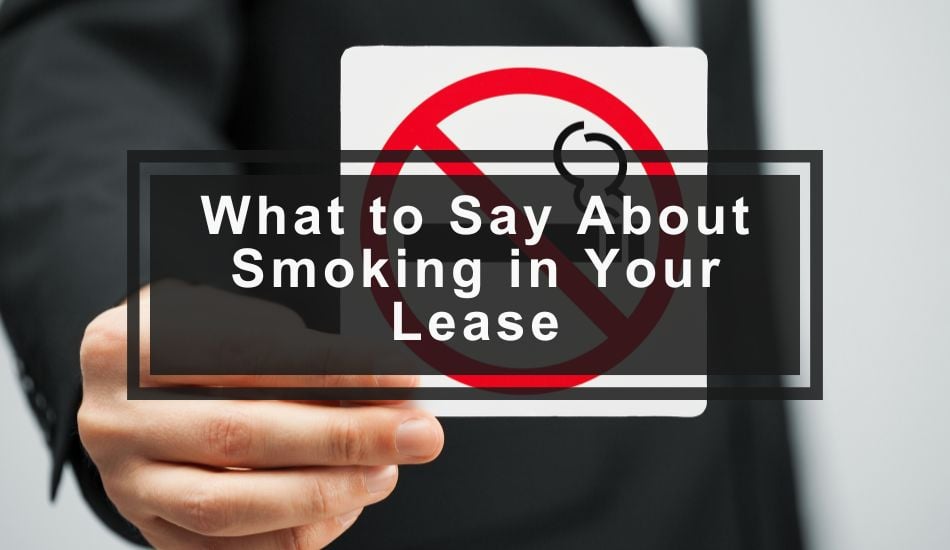
Whether or not to prohibit smoking in your lease is an important decision for landlords, and most choose to prohibit it. But you may not know what or how to implement a non-smoking clause in your lease. Learn about smoking ordinances, vaping, and marijuana, and what you should put in your lease to prohibit it.
Smoking in a rental property can cause damage that is exceptionally difficult to repair. Tobacco smoke can stain walls and windows, and the scent can get into carpet, paint, and deep into a home, making it challenging to remove without ripping up the carpet, replacing the windows, or making other significant repairs.
Smokers are not a protected class in the United States, so you can add rules to your lease to prohibit people from smoking on your property. Enacting these rules will help prevent you from needing to repair costly smoke damage. However, it is important that you put these rules in your lease or prepare lease addenda, so that you can enact these rules and have a form of recourse if your tenants do smoke inside.
Implementing Smoking Rules
For a new lease, putting a no-smoking clause in is relatively simple. With the correct wording, you can create a lease that prohibits smoking and protects your property from the damage it can cause. The American Nonsmokers Rights Association offers a model for a smoke-free lease addendum. Additionally, the American Apartment Owners Association has a model for developing a lease agreement with a non-smoking clause.
As a general rule, both an addendum and a smoke-free lease should include the definition of smoking, the purpose of the policy, how the rule will be applied, the area it applies to, and the recourse if the rule is broken. You should follow the format you use for other lease rules and cover the rule in as much detail as possible. Consider using the assistance of an attorney who works with your local landlord-tenant laws. If you have a multifamily property, you can set up a designated smoking area, provided it is at least 25 feet from any building entrances.
Learn more: Rental Property Inspection Checklist for Landlords and Property Managers
Should Vaping Fall Under the Same Rules?
While vaping is often considered an appealing alternative to cigarettes, cigars, or other forms of smoking tobacco, it doesn’t necessarily need its own rules. Smoking is often defined as breathing or carrying any lit smoking product, which would exclude e-cigarettes and vaping. However, this does not necessarily mean you cannot ban it.
The decision is ultimately up to you, but be aware that it is more difficult to identify vaping than it is to identify smoking. This means that it may be easier for tenants to get away with vaping, whether you prohibit it on your property or not.
How to Manage Marijuana Smokers
Marijuana smoke can get into walls and flooring just as easily as any other smoke and, while it may not be as harmful as tobacco smoke, it can be just as much of a nuisance to potential renters and buyers. In states where it is legal, marijuana is commonplace, but many people, many neighbors, will find it irritating close to their homes, and it may cause damage to your property if done indoors.
As such, if you instate a non-smoking policy, you should include marijuana in the wording. While it may be implied by the common definition of smoking, you may want to include it explicitly in your lease’s rules.
How to Clean A House After Smokers
Unfortunately, cleaning a house after someone has smoked inside of it is quite challenging and can become expensive, so it is ideal to prevent people from smoking in it to begin with. The more someone has smoked inside, the harder it is to clean. But sometimes, even with no-smoking clauses in your lease, people can still smoke inside their rentals. This is one of many reasons that it is essential to conduct regular property inspections, as you can catch the signs of someone smoking inside as early as possible.
If someone smokes inside your property, you have many routes for repair. The Thirdhand Smoke Resource Center has excellent information on how to clean and repair a home after smokers have lived in it. You may need to completely replace appliances such as your HVAC system, or rip up and replace flooring. Drywall, cabinets, or any furniture you may own might need to be replaced as well.
Learn more: What to do About Foul Odors at Your Rental Property
Final Thoughts
A no-smoking policy can protect your property from significant damage relating to cigarette smoke, and it is an ideal way to promote the longevity of your rental properties. You can prevent the need to replace flooring, wallpaper, paint, and furnishings with a non-smoking policy. Consider these policies to protect your property and the health of yourself and any future tenants or owners.