Are you a part-time landlord who also works a full-time job? Discover practical tips and tools to make managing your rentals easier, save time, and create a better balance between managing your properties, career, and personal life.
Being a landlord can be rewarding, but it isn’t without its challenges. When rental responsibilities have to fit around a full-time job, it’s easy for your rental property to start feeling like a second job. Between answering tenant questions, scheduling maintenance, collecting rent, and keeping up with paperwork, your to-do list can grow quickly.
The good news is that managing rental properties doesn’t have to take over your free time. Whether you’re an accidental landlord who inherited a property, an investor building a small portfolio, or a new landlord looking to grow, the right systems and tools can help you spend less time chasing details and more time enjoying the benefits of owning rental property.
Here are a few practical ways to simplify property management while balancing a full-time career.
Build a Strong Foundation Before a Tenant Moves In
Finding reliable tenants from the beginning is one of the most important steps you can take to save yourself time and headaches later. A little extra effort before selecting tenants can reduce vacancies, improve communication, and help your rental run more smoothly.
Price Your Rental Competitively
Finding the right rental price is about more than maximizing income. The right price attracts more qualified renters without undervaluing your property. A competitive rental price helps attract qualified renters who see value in your property.
To determine the right price:
- Focus on attracting the right tenant rather than simply choosing the highest possible rent
- Use tools such as Rentometer to help evaluate current, comparable market rates
- Highlight what makes your rental stand out. Identify features that make it unique or desirable. Depending on the area, small features can be deciding factors for tenants, such as:
- A fenced yard for added privacy or a pet
- An attached garage for convenience and security
- Walkability to shops, restaurants, or public transportation
Aim for a rental price that works for your investment while appealing to qualified renters.
Create a Rental Listing That Gets Noticed
Your rental listing is the first impression potential tenants have of your property. A clear, complete listing can help attract qualified applicants while reducing follow-up questions from prospective tenants.
A strong rental listing should include:
- High-quality photos
- A detailed property description
- Amenities
- Accessibility information (if applicable)
- Pet policy
- Rental requirements
- Applicable fees
The more information you provide upfront, the more likely you’ll attract applicants who are a good fit.
Simplify the Rental Application Process
Once prospects start showing interest, keep the application process organized so you can review applications at your convenience.
Your application process should:
- Make it easy for applicants to apply online.
- Collect the information needed for screening.
- Keep applications organized.
- Store applicant communications in one place.
Screen Applicants Carefully
Tenant screening helps verify applicant information so you can make informed leasing decisions.
Once a prospective tenant passes your initial prescreening, consider reports such as:
- Income verification
- Credit report
- Eviction history
- Criminal background report
Investing time in screening can reduce tenant turnover and help you find tenants who are a good long-term fit.
Streamline Your Day-to-Day Management
As a part-time landlord, managing rentals shouldn’t take over your evenings and weekends. By creating consistent processes and using the right tools, you can spend less time on routine tasks while still providing a great experience for your tenants.
Make Rent Collection Easy
Collecting rent online saves time for both you and your tenants.
Benefits of online rent collection include:
- No waiting on mailed checks or arranging in-person payments
- Tenants can pay anytime, from anywhere
- Faster access to funds
- Automatic payment records for easier bookkeeping
- Optional recurring payments that help tenants pay on time
Making rent payments convenient can reduce late payments and eliminate unnecessary administrative work.
Communicate Clearly and Consistently
Good communication helps prevent misunderstandings, builds stronger tenant relationships, and often resolves small issues before they become larger problems.
To make communication easier:
- Give tenants a clear way to contact you for different situations
- Respond to questions in a timely manner
- Keep written records of important conversations
- Use email or text messaging or a tenant portal to send notices and updates
A consistent communication process saves time and helps both you and your tenants know what to expect.
Create a Maintenance Management Process
Eventually, every landlord will receive a repair request, but it doesn’t have to derail your day.
A good system should:
- Give tenants one place to submit requests
- Allow tenants to include photos and detailed descriptions
- Track the status of each request
- Keep records of:
- Communications
- Repairs
- Expenses
Always prioritize issues affecting safety and habitability before cosmetic repairs.
View a video to help prioritize maintenance requests: Emergency or Can It Wait? Landlord Maintenance Tips
Keep Your Rental Finances Organized
Keeping your finances organized throughout the year makes managing your rental much easier. A maintenance expense here, a rent payment there, and before long, you’re spending valuable time searching for receipts or trying to reconcile your records.
A property management accounting platform can help you:
- Track rent, fees, and other income
- Record maintenance and operating expenses
- Keep security deposits organized
- Generate financial reports
- Prepare records for tax season
- Budget for repairs, improvements, and future investments
Good financial records make tax season easier and help you make informed investment decisions.
Decide Whether Property Management Software is Right for You
Imagine it’s your lunch break. A tenant reports a leaking water heater, another asks about their lease renewal, and you still need to deposit rent and record last week’s repair expense. Without a system, those tasks can quickly spill into your evenings.
You may not need property management software to be a successful landlord. Many landlords start with spreadsheets, calendars, and paper files. But as your responsibilities grow, staying organized becomes more difficult, and your free time shrinks. If you’re spending more time managing your rentals than enjoying the benefits of owning them, it may be time to consider software that simplifies your workflow.
Automate the Tasks You Repeat Most
Many rental tasks happen on a predictable schedule. Instead of manually completing the same work every month, property management software can automate routine tasks, such as:
- Applying recurring rent or other charges
- Accepting online rent payments
- Send payment reminders
- Calculating late fees
- Tracking income and expenses
- Generating financial reports
When routine tasks are taken care of automatically, it’s easier to manage your rentals without sacrificing evenings and weekends.
Choose Features That Fit Your Workflow
Not every landlord needs every feature available. Before choosing software, think about which tasks take up the most of your time and look for tools that simplify those responsibilities.
Features you may find valuable include:
- Rental listing syndication
- Online rental applications
- Tenant Screening
- Online rent collection
- Maintenance Management
- Electronic lease signing
- Built-in communication tools
- Property accounting and financial reporting
- Mobile access
The best software isn’t necessarily the one with the longest feature list; it’s the one that helps you manage your rentals more efficiently without adding unnecessary complexity.
Part-Time Landlord Checklist
Before listing your next rental, ask yourself a few questions:
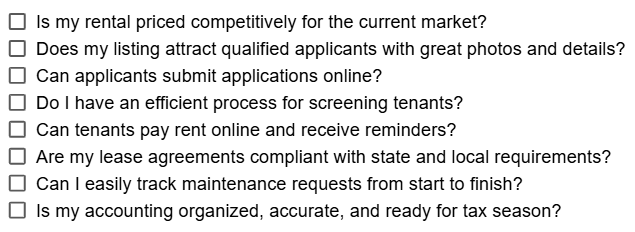
Tip: If you don’t have a rental agreement, many companies, such as LawDepot or BlueMoon, can provide state-specific agreements for your area.
Final Thoughts
Whether you’re managing one or several rentals, balancing being a part-time landlord with a full-time job is easier when you have good processes in place. Start by creating a strong foundation for landing qualified renters who are a good fit, simplifying your day-to-day tasks, and using technology where it saves you the most time. Even small improvements can make managing your rentals more efficient while helping you reclaim more of your time.