Have you ever had a tenant modify your property without your approval? Here’s how you can react. Learn about documentation, property inspections, communication regarding problems, and what recourse you have when a tenant changes your property without permission.
When you rent out a property, you expect your tenants to decorate their living space, but not every form of decoration is renter-friendly. When major changes occur, you typically want to have control over those changes. However, some tenants will make changes without your approval.
Tenant forums often encourage tenants to customize their space in a variety of ways, and while making a home feel personal is great, some of those customizations make major changes to the property. Modifications such as painting walls, changing flooring, or making renovations to the kitchen are uncommon, but do happen occasionally.
As a landlord, you might want to know how you can or should react to this. While most tenants don’t make major property modifications, especially those that cannot easily be reverted, it does happen occasionally, and needs to be addressed. Here are some ways you can respond if a tenant modifies your property without your approval.

Document and Communicate With the Tenant in Writing
Documenting is the first step when dealing with unapproved changes to a property. Take photos of the modifications and ask your tenants in writing what they changed. Any further communication should also be documented, as you may need to prove what was changed, the actions you took in response, and any resulting issues.
Should you need to take legal action, having documentation is highly recommended. You should photograph your property before all tenants move in, and assuming you have done so, proving that changes were made is easy when you have photos of the changes.
You should also find out when these property modifications were made. Ask for dates, the names of contractors, and receipts if possible. A tenant may have attempted to DIY their home upgrades, which could put you and them at risk of mistakes and breakage as a result of these modifications being done unprofessionally.
Learn more: Tenant Communication Tips | The Key to Avoiding Disputes
Ask for Changes to be Reverted
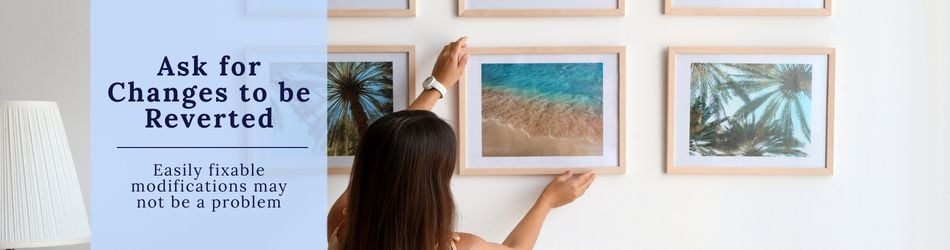
Not every change your tenant makes to your property is permanent and thus, not necessarily something to worry about. Some tenants can make lots of temporary upgrades to make their home feel more like it belongs to them. Changing hardware (with the intent to restore it upon moveout), easily removable temporary wallpaper, or other modifications that can be done without damaging or permanently affecting the look of your property may not be cause for concern.
However, if a tenant makes changes that you worry would damage the house, you can request that they be corrected. Discuss limitations with your tenant, explain what you are and aren’t comfortable with them doing, and understand that not every temporary modification is within your control.
Refer to the Lease
As with most landlord-tenant disagreements, the lease is often the first point of reference for clearing up misunderstandings and confusion. Typically, when you encounter problems with a tenant, you should refer to the rules set out in your lease.
If your lease has no clauses prohibiting modification of the property, it may cause you a bit more trouble. Still, any modifications that constitute property damage are considered against the landlord’s consent unless explicitly grantedand, ideally, in writing. It is best practice to ensure that you have a clause in your lease explicitly forbidding modifications and stating what is and isn’t considered a temporary or reversible modification.
Many tenant forums encourage tenants to paint their walls, so this is a common modification they may make without your permission. While it is a common upgrade, it is also something you may want to be informed about or provide permission for, so it is a good idea to outline those allowances in your lease.
Prepare to Hold the Security Deposit
Holding security deposits to repair or revert changes a tenant made without permission is a fairly common practice, as it is the easiest form of recourse you have for handling these problems. Inform your tenant that you intend to hold the deposit if changes are not corrected, and inspect your property regularly.
When bringing new tenants into your property, inform them of your policies regarding changes, such as painting, outline what constitutes a major change, and ensure they’re aware of the consequences if they make those changes anyway. However, it is important to know what the laws in your area are regarding security deposits. Typically, changes to the property can be considered damage and unauthorized alterations, but you should understand your specific area’s security deposit laws.
File for Eviction
In many cases, unauthorized property modifications constitute a violation of the lease. As such, it is possible to evict a tenant for making changes without your knowledge or approval. This is another consequence that may warrant a warning ahead of time, as it is a drastic measure, but it is well within your rights in most situations.

Final Thoughts
Tenants personalizing their home is quite normal, but placing limits on what they can do is an important part of being a landlord. Having these steps in place can make your job significantly easier. Communicate your limits, ensure your tenants understand them, and be prepared to enforce boundaries and consequences if something goes wrong.