Whether someone is moving in or moving out, there are inspections to be had. Explore our rental inspection checklist to prepare for walkthroughs and property inspections.
Moving tenants in and out of properties is a necessary part of being a housing provider, and one of many important tasks that come with it is property inspections. Through these inspections, you can assess the condition of your property and determine your next steps. Although it is an important process, it is also straightforward, simply requiring a small checklist of areas to assess.
Typically, you will walk through the property with your tenant initially before they move into the property, and again after they move out.
Landlords and property managers should also be conducting regular inspections throughout the tenant’s time living on the property. Both for legal compliance and tenant comfort, these inspections should be scheduled with the tenant in advance.
With these property inspections, take the opportunity to check in with your tenants. Ask how their time living on the property is going, and ask if they have had any issues with the property. Check any carpets, walls, windows, and appliances, as well as anything in the house that may be damaged over time. Be sure to check for any maintenance issues that need to be addressed before larger and more expensive damage occurs. Between regular check-ins with tenants, most states allow you to perform drive-by inspections periodically and without disclosure, but use this ability sparingly, as it can make your tenant feel uncomfortable.
How to Prepare for Rental Property Inspections:
When preparing for an initial inspection before a new tenant moves in, you should clean the property thoroughly. Consider the following services before conducting a move-in inspection with your new tenants:
- Carpet cleaning
- Common maintenance tasks (i.e., gutter cleaning, yard maintenance)
- Replace burnt-out light bulbs
- Repair minor damage, such as leaking pipes
Any routine maintenance tasks should be performed before this inspection is completed. While preparing for property inspections is typically the tenant’s job, the first inspection is intended to establish the initial state of the property. Having a property in good shape will help you down the line when and if damage occurs.
Learn more: Tenant Turnover | The Move-Out Process
How to Conduct a Rental Property Inspection:
Rental property inspections should cover the entire home, including closets. When conducting a rental inspection, regardless of whether it is a move-in or a move-out inspection, check this list of potential problem areas:
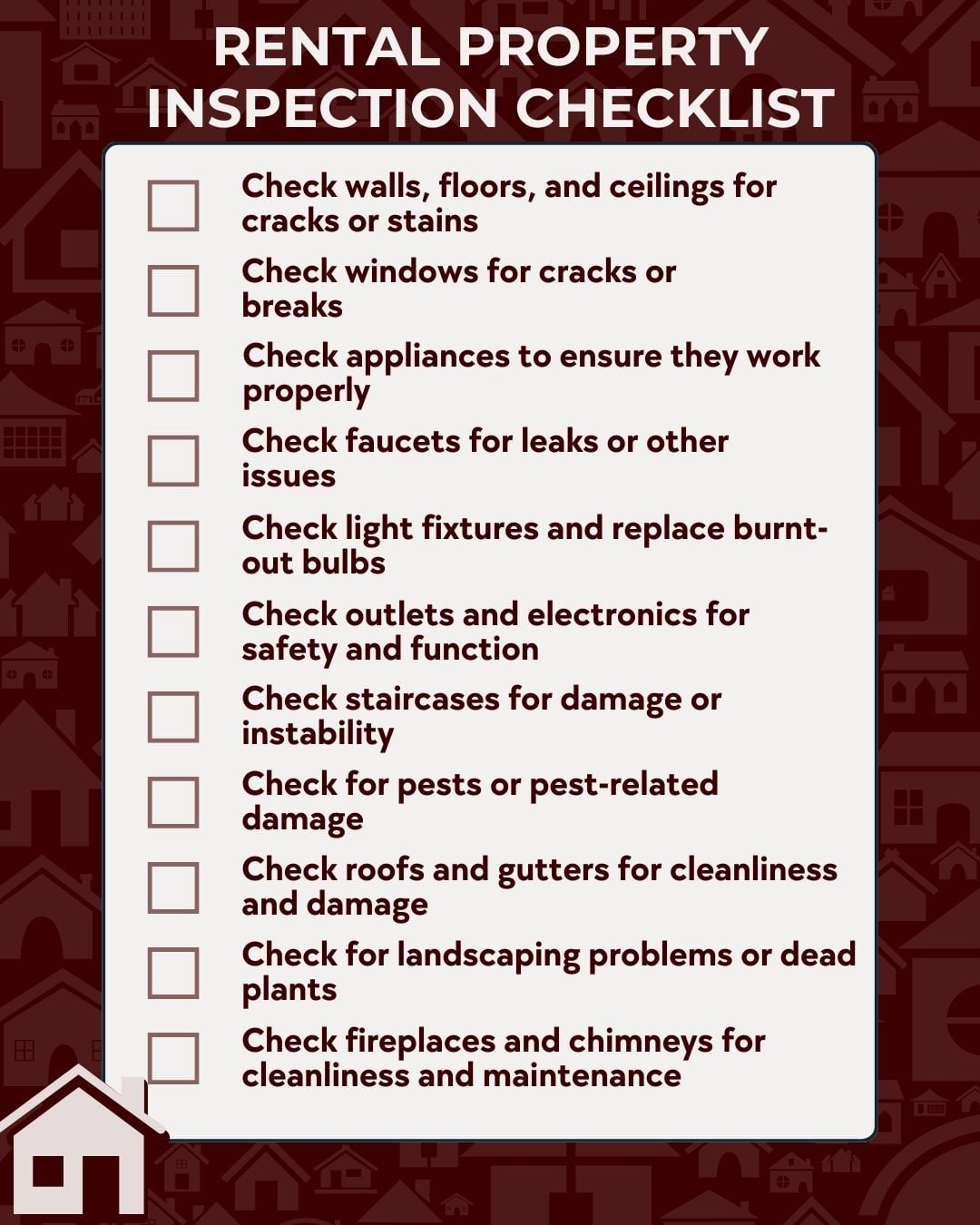
- Walls, floors, and ceilings — Ensure there are no cracks, stains, or other damage, and note down any preexisting damage
- Windows — Cracks, broken glass, or other damage should be noted and repaired
- Appliances — All appliances should be functioning properly and as intended
- Faucets and pipes — All should be free of leaks and have no issues
- Light fixtures — Burnt-out bulbs should be replaced, any cracks in the fixtures should be repaired, and wiring should be checked
- Outlets and electronics — All outlets and wiring should be undamaged and safe, with intact wiring
- Staircases — Steps should be stable and secure, railings should be safe, and measures should be taken to prevent falls
- Check for pests — No termites, fleas, mice, or other pests
- Roof — Gutters should be clean, no cracks, damage, or missing shingles
- Landscaping (if applicable) — Plants should be alive, and the yard should be reasonably maintained
- Fireplaces and chimneys (if applicable) — Should be clean, clear, and free of damage
If any damage is found prior to the tenant moving in, note it down and record it, either with a photo or a video. If possible, fix this damage before the tenant moves in, but if it cannot be addressed before move-in and does not impact the quality of life, store this information until the tenant moves out. When they move out, inspect the property again for any new damage, which may be deducted from their security deposit.
Note that the costs to repair preexisting damage cannot be taken from a tenant’s security deposit. Additionally, damages that are considered normal wear and tear, such as carpets becoming worn over time or slight wall damage due to decorations, cannot legally be considered when returning or withholding security deposits.
Learn more: Important Inspections for Your Rental Property
Appliances to Check in a Rental Property Inspection:
When performing an inspection, it is important to check the appliances, which include the following:
- Refrigerator
- Water heater
- Smoke and carbon monoxide detectors
- Plumbing
- Oven
- HVAC system
Make sure these items function properly and conduct any necessary repairs and maintenance. Ensure that your tenants feel comfortable and safe using these items, and old, outdated, or damaged appliances should be replaced.
When to Conduct a Rental Inspection:
It is advised to, at a minimum, conduct these inspections at the beginning and end of each tenancy. However, it is also recommended that you perform regular inspections during the tenancy as well, based on an agreement between you and your tenants. This can minimize the possibility of lease violations such as unauthorized pets or long-term guests, as well as reduce the risk of major damage.
Final Thoughts:
Rental property inspections are a cornerstone of the rental industry. They prevent property damage, guarantee transparency with renters, and discourage lease violations. With this checklist, you can ensure that your property is always in good condition and stays safe.