Are you moving into a new home with pets? Discover these easy steps to pet-proof your new rental home and ensure you keep your deposit. Learn about the different locations and ways you can pet-proof, and learn about training and occupying your pets while you’re out of the house.
When you move with a pet, it is important to consider their needs as well as your own. If you have a dog that needs lots of attention and space, it’s best to find a home with a yard and lots of room. If you have a cat that loves to watch out your windows, maybe you would like to have a home in an area with lots of birds.
The most important things to consider when moving with your pets, however, are your pet’s safety and your pet deposit. Ensuring that your pet doesn’t damage your rental is vital, especially when you have a deposit or pet deposit. Fortunately, there is a vast array of options for pet-proofing your home.
Consider these methods of pet-proofing your new rental to keep your pet deposit and prevent issues with your landlord, and try this PDF checklist for general pet-proofing. Landlords and property managers, share these suggestions with any pet parents you rent to if you want to help protect your property and their pets.
Download the PDF quick guide: Pet-Proofing Checklist
General Pet-Proofing for Renters
As a general rule, your entire home can benefit from some specific pet-proofing methods. Keep cleaning products on-hand, regularly groom your pets, including brushing and nail clipping, and ensure that they are properly entertained while you are outside of the home to prevent any destructive behavior. Additionally, you can place machine-washable rugs throughout your house in case of any messes, place mats beneath your pets’ food and water bowls, and clean off your pets thoroughly any time they come into the house from outside.
It is also important to ensure you lead a lifestyle that accommodates your furry companion. Don’t leave them home alone for excessively long periods of time, and ensure they get the exercise they need. A tired pet is an easy pet.
Landlords considering modifications to make their property more pet-friendly may want to remove carpets and opt for laminate and linoleum flooring. Washable semi-gloss paint or vinyl wallpaper options for walls are easier to clean pet messes off of than other paints or wallpapers as well. Finally, mini-blinds, especially delicate plastic ones, are easily broken or otherwise damaged by pets, so replacing those with simple curtains may prevent damage.
Learn more: Practical Tips to Pet-Proof Your Rental Property
Pet-Proof Your Rental’s Kitchen and Bathroom
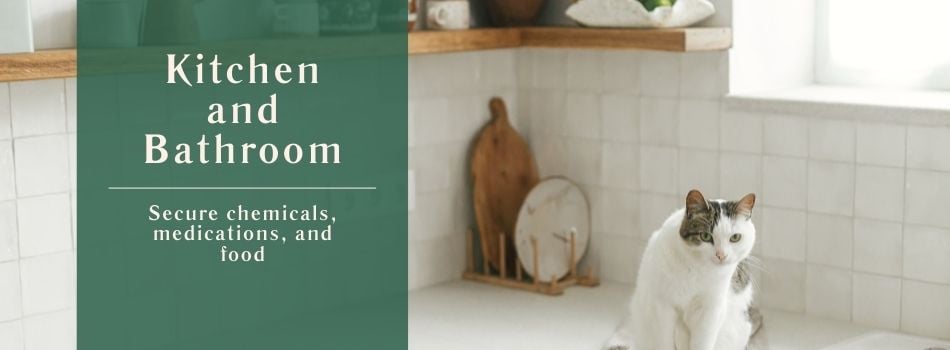
The kitchen and bathroom pose many hazards to curious and accident-prone pets. Cleaning chemicals, food meant for human consumption only, medications, and other similar hazards can make a pet sick, resulting in messes on your floors, expensive vet bills, or even the loss of a pet.
To prevent these concerns, keep all food, medications, and cleaning supplies secured. Even if something isn’t harmful to your pet on its own, the packaging could be a choking hazard. Consider child locks for your cabinets to prevent any pets from getting into them.

Pet-Proof Your Rental’s Living Room and Bedroom
To pet-proof your living room, move any loose wires that could tangle a cat or dog. Crafting supplies, games, children’s toys, and delicate technology can all be hazards with an overly adventurous pet. Clothing, socks, and shoes can all be destroyed or become choking hazards if not kept away from a pet. Keep poisonous house plants out of reach, or out of the house entirely if your pet is a known counter surfer.
If a pet plays with or has a mishap involving these items, they could get hurt, but they could also damage flooring, walls, or other areas that risk your deposit. The living room is also a location where rugs may be the easiest to place. An easily-cleaned rug can make the difference between an inconvenience and a lost deposit due to carpet or floor damage.

Train and Entertain Your Pets
Even with the best of pet-proofing measures, you should make an effort to train your pet out of any destructive habits. Potty training is an essential part of pet ownership, and early desensitization can prevent issues later on. If a pet cannot be left alone without destroying something or making a mess, crate train them or organize pet sitters.
Often, the best way to stop damaging habits is to find a safe way for them to exercise their destructive instincts. Scratching posts and toys for cats that enable them to chase and play are an effective way to curb wall or furniture scratching. Regular walks and chew toys can prevent dogs from destructive behaviors as well.

Final Thoughts
There are many ways you can pet-proof your home, ranging from simple floor protection to significant lifestyle changes. Choose a method that works for you, and scale up as you need to keep your companions happy and healthy.