
When purchasing an investment property, one of the first things you will want to think about is whether you want to have a long-term or short-term rental. Explore the pros and cons of long-term vs short-term rentals and decide which option works best for you.
As a landlord, you have an array of options to choose from when deciding what you want to do with your rental. You can choose your lease terms, how you want to maintain your property, and more.
However, one of the first decisions you will make is how long you want your renters to stay. You can choose a long-term rental, offering a lease and allowing people to move in, or offer a short-term rental, where your tenants will only stay briefly.

While both options are great and can be highly beneficial, each one has its pros and cons. Consider the benefits and challenges of long-term vs short-term rentals and decide which option is right for you.
Long-Term vs Short-Term Rentals:
The line between long-term vs short-term rentals is, as the term suggests, the length of the stay. Typically, a stay at a short-term rental is no longer than 30 days, whereas a long-term rental can last for a much longer period.
Additionally, some cities and counties have placed restrictions on rental properties, so there are some differing laws you will need to be aware of if you own a short-term rental. For example, some cities prohibit you from owning a property for the sole purpose of short-term rentals. In these locations, you or another tenant would be required to live in the house for the majority of the year.
Benefits of Long-Term Rentals:
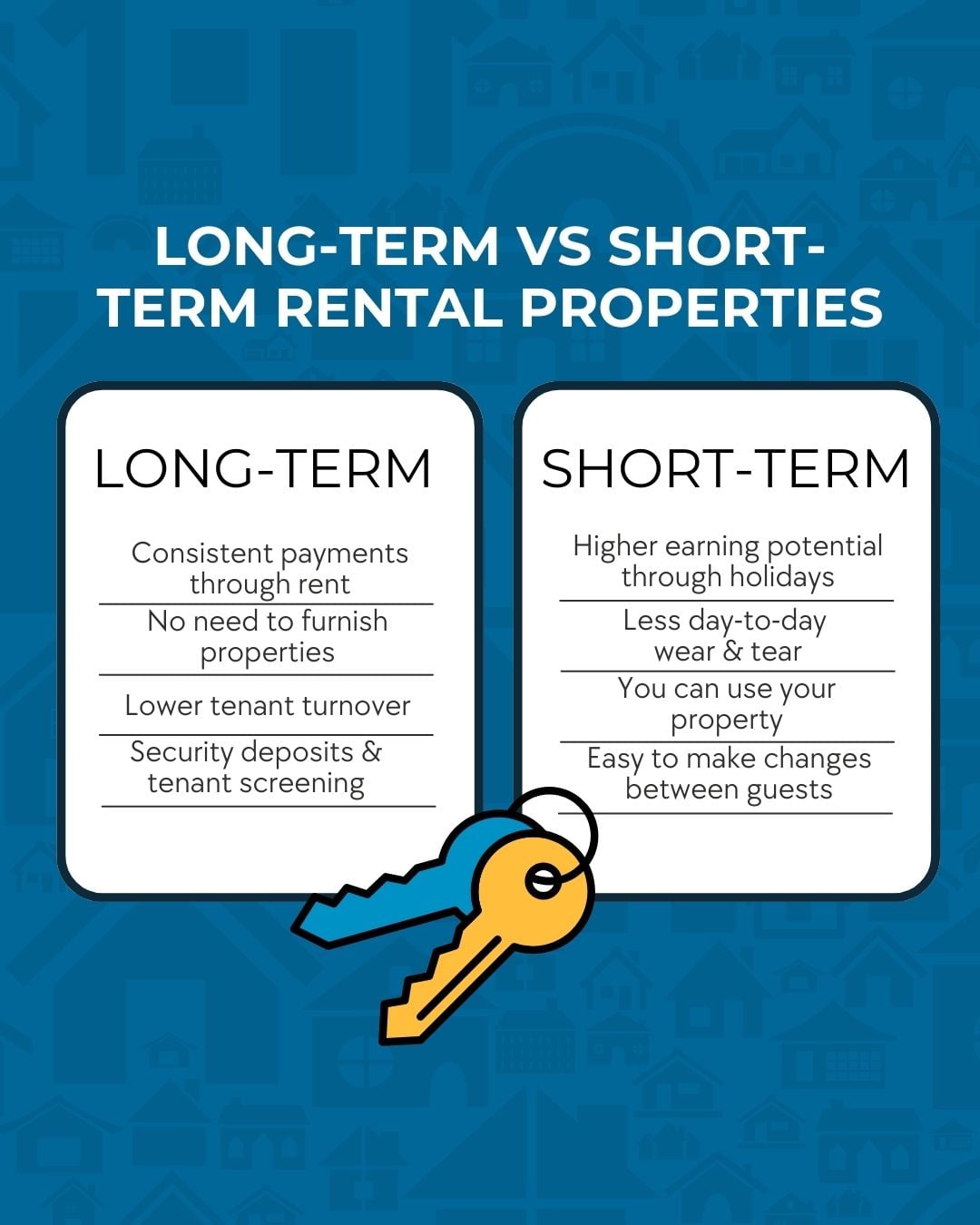
A long-term rental can benefit you greatly as a landlord. These benefits include consistent payment through monthly rent, having security deposits to protect your property in the event of damage, and not needing to furnish the home as you would for a short-term rental. You would also have people living there consistently, meaning that the property would benefit from the day-to-day care of an inhabitant.
Other pros of renting out for the long term include a slower turnover of residents. You don’t need to arrange cleaning as frequently since you won’t have new renters coming in every week. Additionally, this lower turnover means that you do not need to worry about passing off keys to strangers. You can build a rapport with your tenants and expect them to be there for a year or many years.
Learn more: When To Convert A Short-Term Rental to Long-Term Rental
Drawbacks of Long-Term Rentals:
While long-term rentals have numerous benefits, there are also some disadvantages to understand. These drawbacks include an increased amount of wear and tear from tenants living on the property consistently. Additionally, if your property is rented out long-term, you can’t use it yourself. With a short-term rental, you would have the opportunity to enjoy your rental as a vacation home between guest bookings.
Another drawback of renting out your property long-term is that you don’t have as high potential earnings as a short-term rental would. While a short-term rental can raise its prices based on the season and demand, a long-term rental must keep a consistent price in accordance with the lease terms.
Benefits of Short-Term Rentals:
Short-term rentals offer a range of unique benefits that distinguish them from long-term rentals. These include higher earning potential, with holidays and other such events increasing the demand for rentals. Other benefits, such as decreased wear and tear and the ability to use your property, can also be of interest to property owners. When people aren’t staying on your property, it can also be used as a vacation home for yourself.
If you own a short-term rental property, you can also benefit from the freedom to decide when you want to rent your property out. Want to remodel? Simply remove your property from your listing site. You don’t have to wait until tenants move out or worry about a lease preventing you from changing things up.
Learn more: A Guide To Converting Long-Term Rentals Into Short-Term Rentals
Drawbacks of Short-Term Rentals:
Many of the drawbacks of short-term rentals go along with the benefits of long-term rentals. For example, your payments are less consistent than they would be if you had renters living there full-time. Short-term renters may also not look after the property in the same way as someone who lives there. This also means that your properties are likely to sit empty during certain times of the year.
Another disadvantage is that you will have to maintain your property more often. You will need to clean your property every time someone stays there, and, while there is less wear and tear, cleaning becomes a much more regular task.
High tenant turnover also means you will need to hand off keys to new renters often or arrange other methods of pickup, and you won’t have the opportunity to create a relationship with your tenants. This lacking relationship also carries with it a lack of trust. You do not know everyone who will stay at your property, and some platforms intended for short rental stays do not screen tenants as you would if you were renting out a property long-term.
Learn more: Construction on Rental Properties: Your Rights and Your Tenants’ Rights
Final Thoughts:
Ultimately, both rental options are excellent choices. Both can be highly beneficial to you and allow you to earn money as a landlord. The key difference between these two options is which one benefits you the most. Finally, don’t let these designations scare you off. It is entirely possible to transition your property from a long-term rental to a short-term one, and vice versa. Now that you know the pros and cons of each option, make the right choice for your rental property — compare your long-term and short-term rental options.