
If you do a web search for mini home, you’ll typically come across a cornucopia of information for the Google Home Mini device. Although useful in any type of home, it doesn’t lend much information about the current trend for living in small spaces.
From treehouses to yurts, there are many unique small spaces to rent for a vacation. But these days, small quirky places are hot property for the rental market in general.
For the investor, small rental spaces could make a big impact in the coming years. For renters, it means easing the housing shortage and paying less in rent.
Tiny House Rental Movement
Throughout history, small living quarters were commonplace. In the US, even the large manufactured and mobile homes of today had humble beginnings with traveling nomads in small caravans to small dwellings brought in for military housing.
In the US, housing 100 years ago had a much smaller footprint. The average floor area per person was 179 to 284 sq ft. Fast-forward and in 2025 the average American home was 2,176 sq ft, making the per-person area a whopping 702 sq ft. Although apartment sizes are shrinking slightly on the East and West coasts, they still average 887 sq ft, and most are individually occupied.
So if space is available to rent at approximately 900 sq ft or more per person on average across the US, why would people opt to go small? How small are we talking, and where is this tiny home movement taking us?
Why Live or Invest in Tiny Homes
Either out of financial necessity, urban housing shortage, population changes, and/or based on lifestyle choices, tiny living is on-trend. Globally, in very populated areas, it’s not unheard of to rent spaces the size of a closet. New York and San Francisco have been known to market rental units under 100 sq ft regularly.
Financial Necessity
From tiny houses to studio apartments, tiny homes are less expensive than their larger counterparts. With housing prices on the rise while wages stay static, purchasing a home is out of reach for much of the population, leaving renting as the alternative. With that, rental market rates continue to rise, and renters are turning to more affordable rentals, which often means going small.
Urban Housing Shortage
Affordable housing is often scarcest in populated urban areas. The closer to a metropolitan city, the greater the demand for housing.
Fortunately, many large cities are reworking and easing regulations to allow for renovating a single-family residence to create rentable accommodations and/or add on units (see below types).
Population Changes
The household size in the US has continually been on the decline, and in the 21st century. While it has increased somewhat in recent years, one-person households made up nearly 30% of all households in 2025. Additionally, households with 4 or more persons have nearly halved since the 1960s.
Translation: the fewer persons in a household, the smaller the needed housing space.
Lifestyle Choices
Setting aside any financial constraints and housing availability concerns, some opt for small living spaces for personal reasons, such as:
- Minimalist and/or environmentally focused life choices
- Allocating more funds towards lifestyle choices
- Smaller homes tend to need as much maintenance and housecleaning time
- A small rental allows for a more intimate, cozy environment
Whatever the reasoning, as renters decide to live small, it’s good to understand the differences between these tiny dwelling options.

Accessory Dwelling Unit (ADU)
In San Diego, a detached ADU may be up to 1,200 square feet regardless of the size of the single-family residence. Typically, an attached unit can range from 725 to 1,200 sq ft, depending on the size of the main residence.
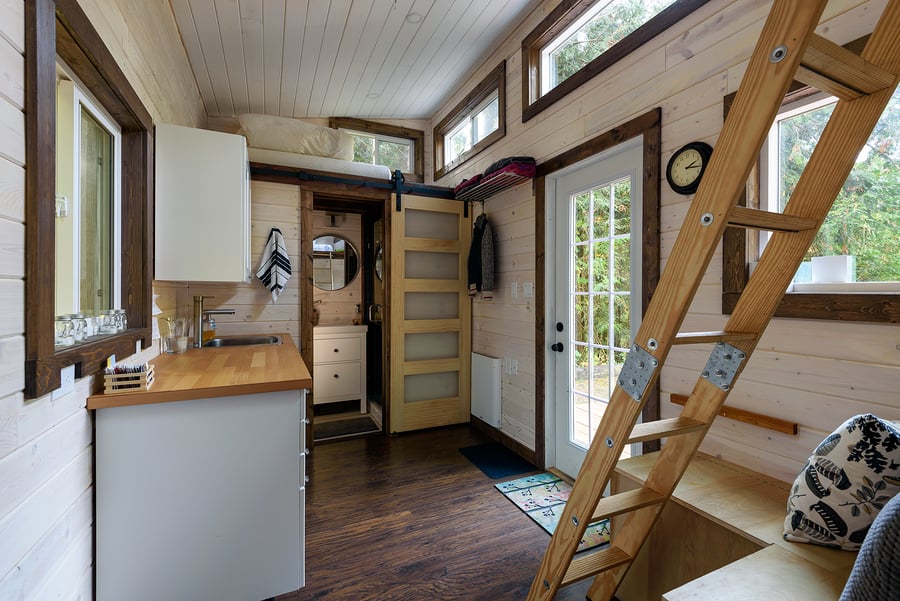
What is an ADU? ADU is a generic term that means any additional space allocated, renovated, and dedicated to housing other than the main single-family residence. If an ADU is detached as a completely separate structure, it would be called a Detached Accessory Dwelling Unit (DADU).
Some attached and detached terms you might find on rental listings:
- Cottage
- Backyard Cottage
- Guest House
- In-Law Unit
- Laneway House
- Carriage House
- Bungalow
- Cabin
- Cabana
- Mother-in-Law Unit (or cottage)
Terms you might find if the unit is within the single-family home structure:
- Basement Conversion
- Basement Apartment
- Secondary Suite
- English Basement
- Accessory Apartment
- Garage Conversion
- Above Garage Apartment
- Granny Flat (or granny apartment)
NOTE: To avoid legal complaints and costly court battles, although you may find it in current rental marketing, it is advised never to use terms that could be considered discriminatory to age or family status, such as granny flat or mother-in-law unit.
What Is Not Considered an ADU
A dwelling on wheels is not considered an ADU. For example, many tiny homes are homes on wheels built on a chassis and are rated to allow towing on public roads.
For example, park models and recreational park trailers comply with ANSI housing standards, are no larger than 400 sq ft, and are built on a single chassis mounted on wheels. These can be placed in a mobile home park, an RV park, mixed-use parks, and in some local jurisdictions, on single-family residence parcels.
It’s always advised to check with your local housing and development department for municipal land use and zoning regulations prior to creating a rental space of any size or type.

Small Apartment Rentals
Community living has its small versions as well, especially in urban populated areas. As discussed previously, the average apartment size today is around 850 sq ft in the US, which includes these smaller apartment types:
Studio Apartments
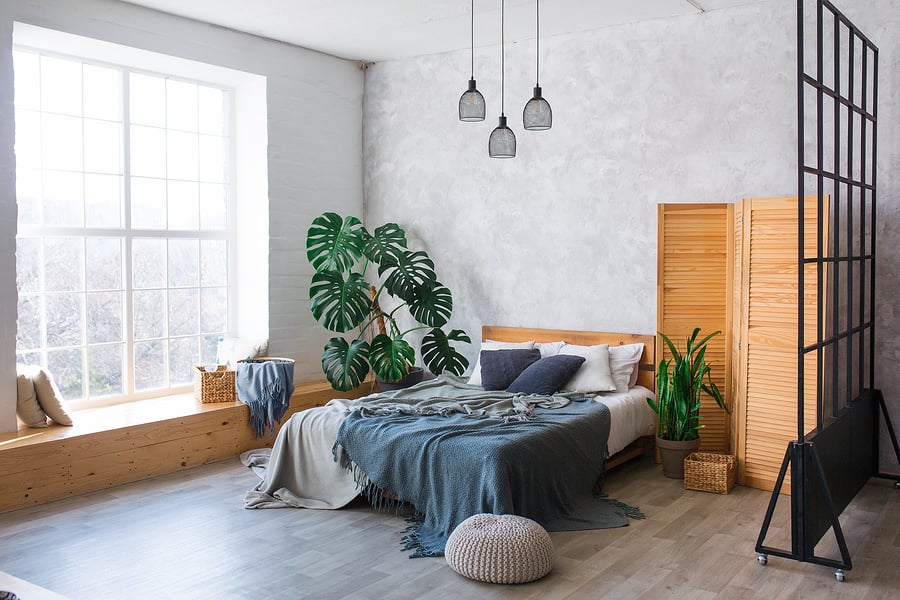
What is a studio apartment? In general, it is an apartment with only the bathroom separated from the main room. In that main room, there are no dividers or designated areas for sleeping.
These studio apartments average in size from 300 to 600 sq ft. Most will have a full-sized kitchen and kitchen appliances, but against a wall without separation from the main living area.
Larger studio apartments were once called bachelor apartments, and they typically have a separate partition around or a completely cornered off area for the kitchen. They are also known as single apartments.
Efficiency Apartments
Although technically the same per the open layout, typically an efficiency apartment is a little smaller than a standard studio. These apartments are similar to an extended-stay hotel room. In fact, many extended-stay hotels are offering short-term options for renters these days.
What sets these apart from a studio is that in place of a full kitchen, they have a kitchenette with smaller-sized appliances. Three-quarter-sized refrigerators and smaller sink areas are common.
Micro Apartment
Mini apartments are smaller than a studio or efficiency unit and hover between 150-450 sq ft. In place of a kitchen or kitchenette, they often have very small appliances against a wall that might include a mini microwave, mini-fridge, and possibly a hot plate. A sink is either near those walled appliances or in the restroom, but not typically in both locations.
Other Small Apartments
In addition to the above, a few other types of small apartments are:
- Single apartments have an average layout of 700 sq ft, which includes a separate sleeping area.
- Junior one-bedroom: also known as a conversion apartment, is a studio with added walls for a separate sleeping area and/or kitchen.
- A loft apartment, which is either an apartment with the sleeping area accessed by a ladder or an entire apartment within the loft of a home.
The Future of Tiny Homes, Accessory Dwelling Units, and Efficiency Apartments
The Governor of California recently approved the Housing Crisis Act of 2019 to ease restrictions on building and renovations for ADU and DADU dwellings. Cities across Oregon are looking to ADUs to help transform the housing scene.
Across the country, states and local municipalities are searching for ways to add more affordable housing options to accommodate the growing urban population and rising housing costs. ADUs specifically are experiencing legislative initiatives.
More and more people are looking to free their time and money to pursue interests and experiences instead of investing in larger homes (both renters and homeowners).
By adding an accessory dwelling, private homeowners can now find an easy entry point to an additional revenue stream as a landlord.
Investors may want to keep their eyes open for opportunities to capitalize on the growing trend. Tiny living is a trend that doesn’t appear to be going anywhere and is likely all the more attractive to renters in the coming years.
RELATED READING FOR YOU:
Rental Industry Trends | What is Coliving?
5 Best Cities to Buy Your First House or Investment Property
Understanding the Differences of a Townhouse Vs Apartment for Renters and Landlords